



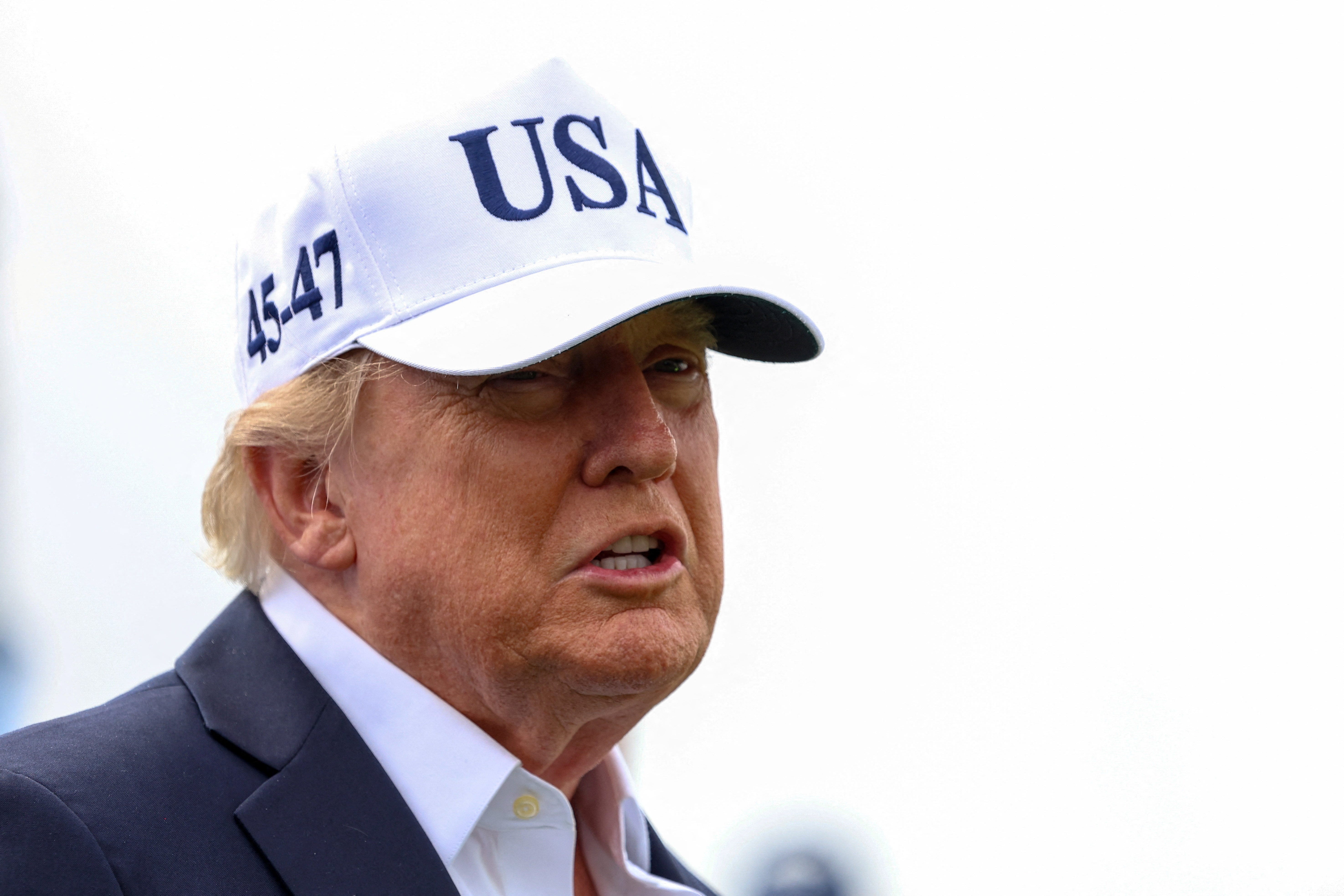
For the first time in more than 40 years of covering the president, I’ve been told I’m not welcome at the White House.
I’ve had credentials off and on since Ronald Reagan was in office, and I’ve been a steady visitor to the White House since the George W. Bush era. Last year, I left for a few months to shoot a documentary about the first 100 days of the new Donald Trump administration. Since then it has been impossible to get back in.
Last week when I filled out the proper forms to enter, I was denied. According to a member of the White House press corps who deals with these issues, the White House told them I had a Secret Service block on my name. My lawyer then contacted the Secret Service who said it wasn’t them blocking me. They take their cues from the White House and I was told to contact them.
I’m planning on suing the White House to get back in. But that costs money. Will you step up and help us fight back by becoming a paying subscriber?
Since then, I’ve heard nothing from the Trump administration despite multiple emails and calls, and no official reason has been given for keeping me from entering the White House campus. Have I been ghosted? I bathe. I brush my teeth. What gives?
With few exceptions, dealing with presidents and their press secretaries during the last 40 years has been a headache. But the current administration is a different matter. It’s virtually impossible to cover this White House, if you don’t do as they demand, and they know it. They embrace their obstinance and they don’t hesitate to embarrass, insult and inflict harm on those of us who are only there to do the job and ask questions.
Every president I’ve covered has been thin-skinned. Some were drunk with power. Some were moronic. A few were very insecure and hid it through false bravado. But they all let me in. That’s quite a bit different than this administration’s petty and vindictive attitude toward reporters.
As for press secretaries, Mike McCurry, from Bill Clinton’s administration was the best I had the privilege to work with. Trump’s most recent press secretary, Karoline Leavitt, was the worst. While MAGA cheered her ability to smile while spitting vitriol at journalists, she, like most of them, forgot that, at the end of the day, press secretaries answer to the American public.
That also goes for most of the recent press secretaries. They have no idea of the standards that I was trained to respect — and don’t care to know.
Most of the reporters covering the president today weren’t even alive the first time I got to ask a president a question in a news conference. In 1992 I attended the “Drug Summit” news conference in San Antonio TX for KMOL-TV. President George H.W. Bush and leaders from seven Latin American nations gathered to cheer about the war on drugs. DEA agents told me that war “was a joke” and when I asked Bush how he reacted to that accusation, I was fired. I was told I was rude. I didn’t care. I did my job.
I’ve gone to jail four times to protect a confidential source. I’ve fought with every president and press secretary I’ve covered. During the first Donald Trump administration I famously asked him about a “peaceful transfer of power” after the 2020 election. I asked if he was “delusional.” And I verbally sparred with him as he belittled me and called me and other colleagues “fake news.” But at least he had enough respect for the Constitution to let me and others into the White House to do our job as we saw fit.
I’m not backing down. But I need your help to mount this battle. Will you help us fight back against Trump?
Today, the current Trump administration lacks the ability to accomplish even that simple task. I’ve held a White House “hard pass” — the press pass granted to those who cover the White House on a daily basis — on four or five different occasions in the last five decades. When I didn’t have a hard pass, I was given a “day pass” which allowed me access to the White House campus on a daily basis. The biggest difference between the two is that day pass holders don’t generally do “pool duty” which grants you greater access to the Oval Office and other events where the press has limited access to the president.
Now, most journalists, especially those who want to ask difficult questions, have almost no access to the president. The current Trump administration has hand-picked most of the members of the press that cover him. Trump no longer talks to the “open press,” meaning reporters who aren’t in the press pool. He hasn’t had a true press conference in Washington, D.C., since he returned to office.
Trump obviously doesn’t want anyone around who would ask him a question he doesn’t want to answer, or more importantly who will press him and follow up if he gets such a question. He uses what limited access he does grant to control those who cover him and to avoid being held accountable for his actions.
This is about press freedom and the need to inform the electorate. The president must be responsible to the public and answer questions from those of us he may not like. He certainly can try to put his best foot forward. We are there to hold a public servant accountable. That’s the job.
Former Washington Post editor Ben Bagdikian once said, “Never forget that your obligation is to the people. It is not, at heart, to those who pay you, or to your editor, or to your sources, or to your friends, or to the advancement of your career. It is to the public.”
Sam Donaldson, one of my early mentors and a man I still humbly call my friend, once told me he was “far more concerned about those who are too disinclined to ask a question than whether or not I was considered rude to the president.”
Helen Thomas, also one of my early mentors, advised me to “just ask the question. It doesn’t matter what the answer is, or even if they answer it. It matters that you ask it and get it on the record. That way they cannot deny the issue has been brought up.”
Some, like McCurry, enjoyed the give-and-take with the press and told me that the Clinton administration “listened because [reporters] all brought to us issues we may not have otherwise addressed. We created policy based on those questions.”
Today? The president doesn’t want to hear it. He calls female reporters “piggy” and belittles anyone who asks him something he can’t handle. That’s his weakness. Ours is not pressing these issues. Everyone in the briefings, or in the pool, should back each other up and hold him responsible for his actions, even if he calls us names or threatens us. Our jobs require a thick hide and the willingness to rankle those in power.
“If you want a friend in D.C. get a dog,” Thomas once told me. When I mentioned that I thought Harry Truman said that, she replied, “Who do you think told Harry?”
For a democracy to work, we have to ask the tough questions, even of those we support — especially of those we might support. We cannot become stenographers or propagandists to those in power.
What is required of those in power is to take the questions. As Truman said, “if you can’t stand the heat, get out of the kitchen.” And as Sam Donaldson told me, “normally, you don’t fire the cook.”
Today, we live in an era of a compromised press that won’t turn up the heat, and a president who bans those who do. I refuse to play that game. And for now, it’s cost me my access. But the only way to deal with a bully is to stand up to them. Trump has to be held accountable.
I don’t know where this fight will take me. But I do know that most reporters in the White House are too afraid to call Trump on his nonsense. No one will call him a “joke” as I did Bush for fear of losing their own access. But if you want to do the job right, then you’ve got to put it all on the line. That’s something we simply don’t do any more. It seems there are few left that even understand that’s what it’s all about.
Now, more than ever, free media is under siege. We’re fighting back, and we can, because we’re funded entirely by our readers. Join the fight against Trump today and invest in media that matters. I’m excited to have you in this fight with me.

I know what it feels like to be left behind after trusting a government and its promises. That is why your words about accountability mean a lot to me. As an Afghan ally who was left behind, I believe people who ask difficult questions should not be pushed aside just because their questions are uncomfortable.
epstein