

Democracy Won In Hungary. Here's What It Took.
Viktor Orbán is gone. Because independent media fought back against a billionaire-captured press.


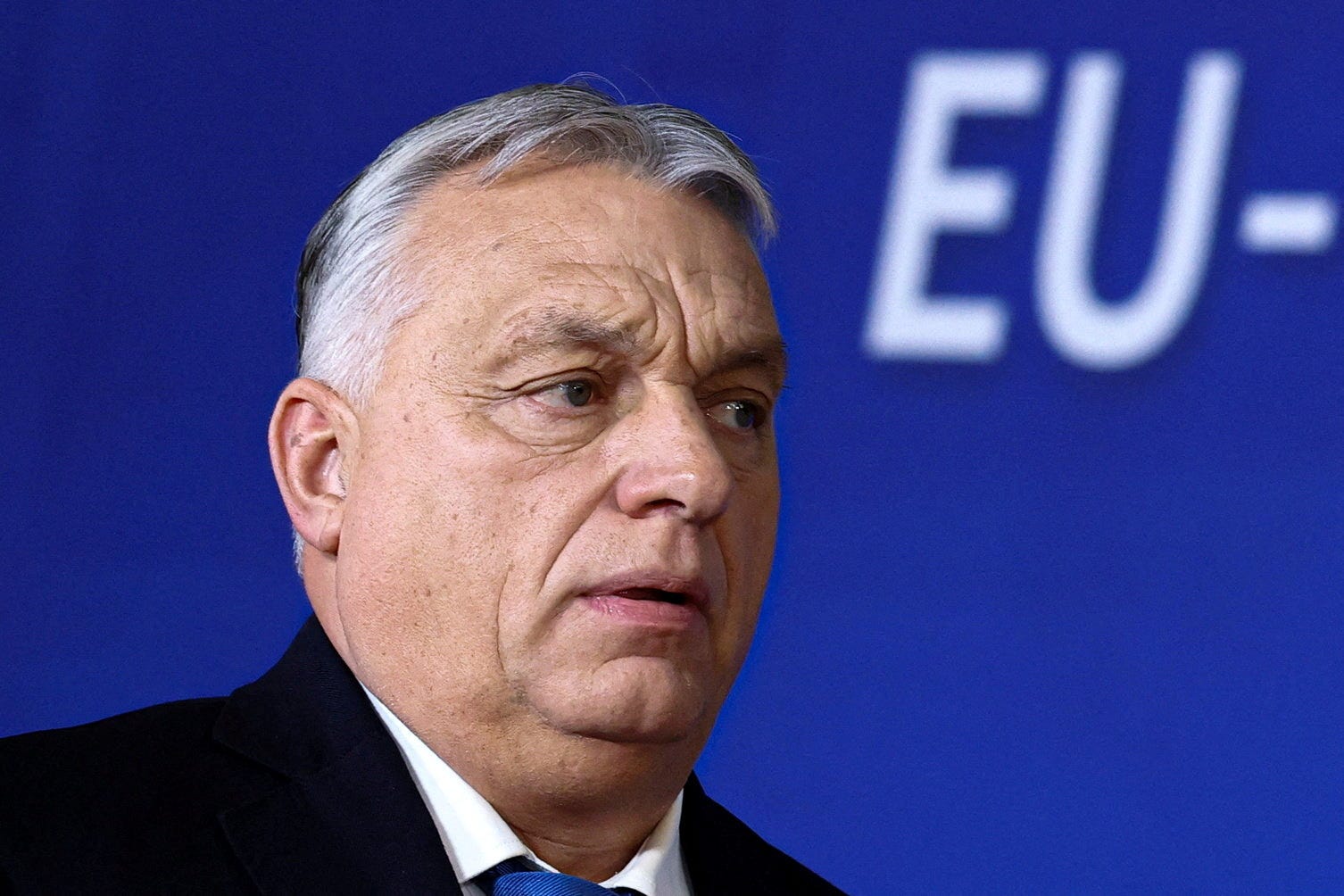
Viktor Orbán is done.
After 16 years of dismantling democracy from the inside — rigging electoral maps, packing courts, buying up 80% of Hungary’s media and turning it into a government propaganda machine — Donald Trump’s closest ally in Europe just conceded defeat.
Péter Magyar and his Tisza party won, crushing the right-wing would-be dictator. Early results show them leading in 95 of Hungary’s 106 constituencies, on track for more than 130 seats in a 199-seat parliament. This represents a potential two-thirds supermajority that would let them amend Hungary’s constitution.
I’m going to tell you how they did it. And why it should inspire you.
Why did Orbán lose? The answer is us. It’s reader-funded independent journalism. It’s a people-powered movement. Orbán’s loss is a testament to independent media, when he held the mainstream media to heel.
What’s happened in Hungary is what’s happening in America today. The corporate media is bowing down. It’s only independent media now that can make a difference, that can bring us back from the brink.
If you’ve been reading Raw America for free, I need you to become a paid subscriber tonight. Not someday. Tonight. By the time you finish reading this, you’ll understand why.
The Hungarian people looked authoritarianism in the face, and they blinked first.
JD Vance flew to Budapest last week to campaign for Orbán. Trump promised to use America’s “full economic might” to strengthen Hungary’s economy if Orbán won. Russia deployed intelligence officers to the capital to help rig the result. And none of it was enough.
Tonight, Orbán told his supporters: “I congratulated the victorious party. We are going to serve the Hungarian nation and our homeland from opposition.” After 16 years of strangling dissent, he now gets to experience it.
Voter turnout hit 78%, the highest in Hungary in decades. People who had given up on democracy came back. They stood in lines. They showed up in numbers that no electoral system, however tilted, could overcome.
“The feeling reminded me of 1989,” said one witness in Budapest tonight, “when the Communist regime collapsed.”
This is what democracy looks like when it fights back.
How Democracy Beat a Media Dictatorship
Orbán didn’t just win elections. He engineered a system in which winning was nearly automatic. After returning to power in 2010, his government rewrote the constitution, packed the courts, and then — most critically — bought up the press.
By this election, approximately 80% of Hungary’s media was under pro-government control. State television ran 15 hours of positive Fidesz coverage per week. Magyar and Tisza received more than five hours of overtly negative or defamatory coverage.
Orbán almost never spoke to independent journalists. He gave his interviews exclusively to Kossuth Rádió, the state broadcaster, where the questions were soft and the answers were never challenged.
Meanwhile, his allies manufactured fake scandals. A forged document claiming Tisza planned a 33% tax rate dominated the news cycle for months. Another fabricated story warned pensioners that Magyar would force them to euthanize their pets. The courts eventually ruled these stories false.
By then, though, it barely mattered; the machine had already moved on to the next lie.
And yet. Democracy survived. Not because of the major outlets. It survived because of independent media that refused to die.
Partizán, an independent YouTube channel, gave Magyar his breakout moment. A handful of reader-supported outlets kept breaking real stories: secret plans to send Hungarian troops to Chad, leaked transcripts of the foreign minister coordinating with Russian officials, evidence of massive EU fund corruption. Whistleblowers came forward because there were still journalists left to call.
“This campaign showed the importance of the free media,” said Marton Kárpáti, president of Telex’s board, tonight. “If you had only read or watched the pro-government websites or outlets, you would have no idea what’s going on in the country.”
That’s the sentence I need you to sit with. And why I want you to consider subscribing today.
Now Look at What’s Happening Here
The Washington Post gutted by Jeff Bezos. The Los Angeles Times under billionaire control. CNN trending toward a Trump-friendly buyer. CBS compromised. The FBI asking Congress to fund a domestic terrorism apparatus targeting people who protest.
America’s media landscape is not as captured as Hungary’s. Not yet. But the same playbook is coming. The same methods. The same goal.
What stopped it in Hungary wasn’t the major outlets. What stopped it was independent, reader-funded journalism that couldn’t be bought, threatened, or shut down. Outlets that answered only to their readers. Outlets that broke the stories the state machine was burying. Outlets that, when a whistleblower needed somewhere to go, were still there.
That’s what Raw America is trying to be. Right now. In this country. At this moment.
We have a reporter in Washington. We’re covering the ICE dragnet, the domestic terrorism task force aimed at protesters. The Epstein cover-up, the media consolidation happening in plain sight. We do it without a billionaire owner, without a network, without anyone’s phone number to call when a story cuts too close.
But we can only do it if you make it possible.
Tonight, Hungarians proved something the powerful don’t want you to believe: that a population given access to real information will choose democracy. Every single time. They just need the journalism to still be there when they make that choice.
In Hungary, it was. Barely. And it was enough.
Don’t make us find out what happens when it isn’t.
Become a paid subscriber today. The story is happening right now. So is the fight to tell it.
— John Byrne
Founder, Raw America and Raw Story
P.S. If you can’t afford to subscribe today, we understand. Times are tough. Please share our newsletter with friends and family. It makes a huge difference. Democracy is on the line, and you’re the last line of defense. Thank you.