
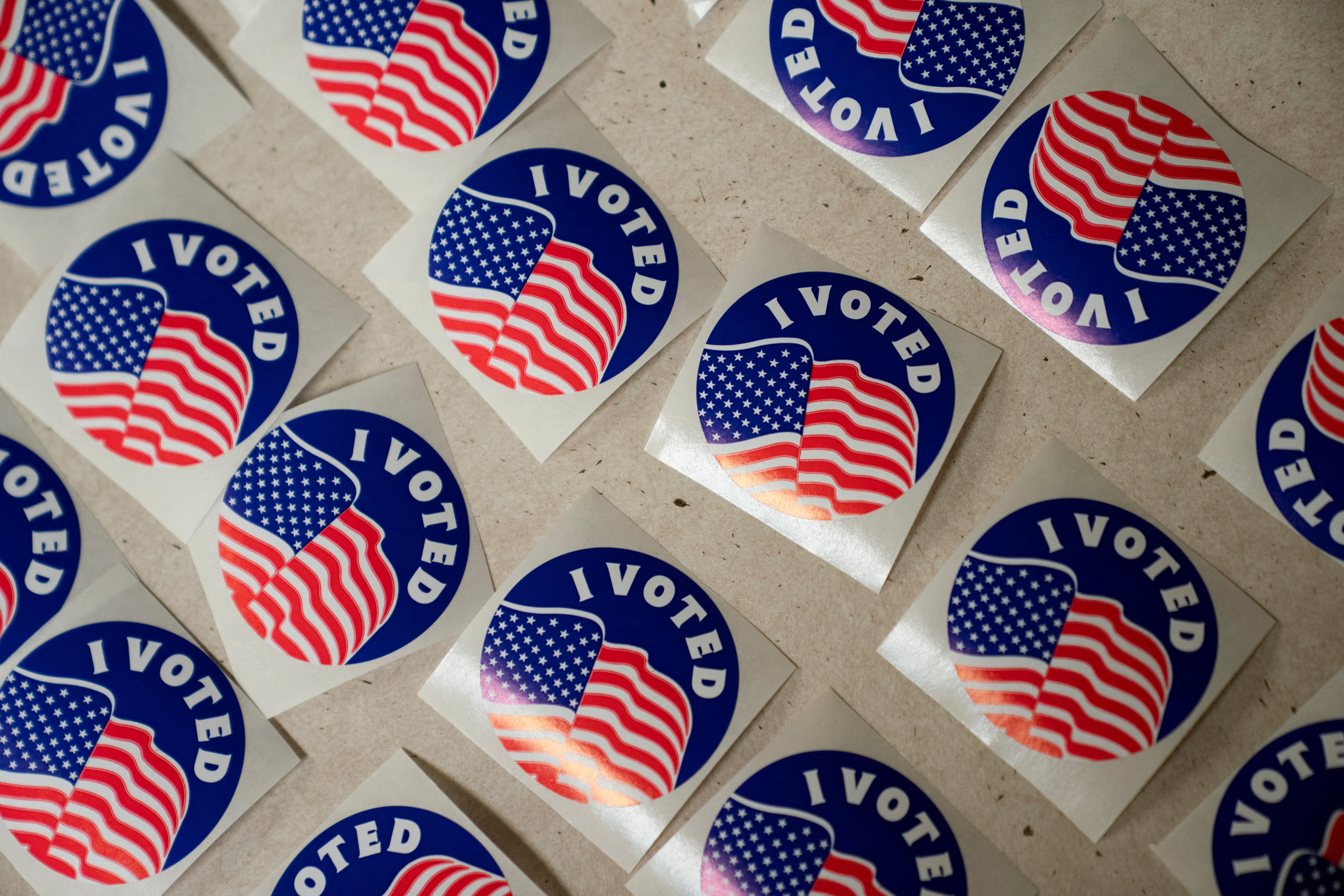
The Voting Rights Act Isn't Dead. A Lawyer Explains Why
Trump wants us discombobulated and weak. We have to step up the fight.
Hey, Raw America family. Welcome to the Sunday Wrapup. I’m here with my cup of coffee after one of the harder news weeks I can remember. On Wednesday, the Supreme Court rolled back the Voting Rights Act. I’ve spent the morning thinking about what’s worth your panic. The answer is: less than the headlines suggest.
Big thanks to our newest paid subscribers. Your support made this week’s interviews with Congressman Ro Khanna and legal expert Anne Mitchell possible. We don’t have a billionaire owner. We have you.
If you’ve been reading for free, this is the Sunday to take the leap. We’ve got a small, fierce team going up against a media ecosystem MAGA billionaires control. The only way independent press survives this moment is if readers fund it. Please consider upgrading your subscription today.
The Voting Rights Act Isn’t Dead. A Lawyer Walked Us Through Why.
Wednesday’s Louisiana v. Callais ruling was bad. The Supreme Court voted 6-3 to strike down a Louisiana congressional map that included a second majority-Black district, and Justice Kagan’s dissent called the majority’s reading of Section 2 “all but a dead letter.” Most of the press ran with “gutted.” Civil rights groups called it devastating.
Raw America Editor Carl Gibson sat down with attorney Anne Mitchell this week to ask whether all of that’s actually true. Her answer surprised me. It doesn’t match what the rest of progressive media is telling you.
“I have to take issue with the word ‘gutted,’” Mitchell told Carl right out of the gate. The ruling didn’t strike down Section 2. What it did was shift the legal burden. Before Wednesday, plaintiffs could prove redistricting violated the Voting Rights Act by showing the effect was to disenfranchise voters of a particular race. Now they have to prove intent: that the legislators drawing the map meant to do it.
That sounds impossible at first. But Mitchell pointed out something I hadn’t thought about. Lawyers prove intent in criminal court every single day. Defendants don’t typically announce their intentions out loud. Prosecutors prove intent through pretext analysis, through circumstantial evidence, through patterns. Civil rights litigators are now going to have to do the same in redistricting cases.
“It’s a setback,” Mitchell said, “but it’s not a death knell.”
She also did something I haven’t seen anyone in the legal commentariat do this week, which is locate Wednesday’s ruling inside the broader strategy of the moment. The Trump administration, she told Carl, “wants you completely discombobulated” — chasing every outrage, screaming about every ruling, exhausted into paralysis by the time the midterms arrive.
“A confused, disturbed populace is a weak populace,” she said. The job of independent press right now is to push back on that exhaustion, not feed it.
She reminded Carl of something the administration would very much prefer you forget. More than 1,500 lawsuits have been filed against this administration since January 2025, and “they’re losing in the courts.”
Losing them overwhelmingly. Mostly complying with orders, too — the lawless-administration narrative is, by Mitchell’s count, mostly wrong. The legal architecture of the country is bent. It isn’t broken.
Liberal lawyers are going to have to roll up their sleeves and do harder work now. That’s a much closer description of what happened Wednesday than “the Voting Rights Act is dead.”
The CBS Firing Tells You Everything You Need to Know
Trump apparatchik Bari Weiss fired the London bureau chief at CBS News this week. Claire Day was a 25-year veteran of the network, and she’d been pushing back on Weiss’s calls for more favorable coverage of Iran. Her replacement, hired from the Wall Street Journal, has no television experience. A CBS source called the dismissal “appalling.”
I started Raw Story in 2004 out of college, eighteen months before HuffPost. I’ve been doing this work for twenty-two years. What happened to Claire Day is what happens when a billionaire-installed editor decides institutional knowledge is an obstacle instead of an asset.
The Founders put press freedom in the First Amendment because they understood a republic cannot survive when a small handful of wealthy men decide what the public is allowed to know. William Randolph Hearst pushed this country into the Spanish-American War with his newspapers. The Ellisons already own CBS and are about to own CNN.
I founded Raw America to be the thing that doesn’t get bought. We work for you because you fund us. If you’ve been thinking about subscribing, this is the Sunday to do it.
The Epstein Story Was Never Just About Sex
Raw America also spoke to Anne Mitchell about the Epstein files. Mitchell says we’ve been reading the story wrong.
The trafficking of girls and young women was real and monstrous. But Mitchell maintains it was always a side door to something bigger. The bigger story was the money. Epstein collected powerful men. They used his island and dinner parties to coordinate: what to invest in, which governments to lean on, which deals to cut. The abuse was the leverage that kept those men coming back and kept them quiet about each other.
“The main event,” Mitchell put it, “is how they’re manipulating the economies.”
Mitchell says this continues in Trump’s cabinet right now. In sworn testimony Ghislaine Maxwell gave Acting Attorney General Todd Blanche, Maxwell said members of what she called the “Epstein class” are inside this White House.
Mitchell named Commerce Secretary Howard Lutnick. Lutnick has claimed he had no contact with Epstein after a certain date. Flight manifests, however, show him on the island well after that.
Mitchell has built a search tool called Tess — Taking Epstein Survivors Seriously — that pulls together the released documents, the Panama Papers, the ICIJ leaks, and Epstein’s flight manifests, and lets you follow a single dollar through every shell company it touched. You can check it out here.
She and a partner are about to release a second tool that does the same for political money: which super PACs funnel cash to which lawmakers, including dark-money networks long impossible to trace. The work is at the-projects.org. Mitchell told Carl their biggest obstacle is getting members of Congress to actually look at it.
A Few Things to Hold On To
The political ground keeps shifting in directions worth noting. Maine Governor Janet Mills dropped out Thursday, clearing the path for Graham Platner against Susan Collins. Progressive Analilia Mejía won New Jersey’s 11th seat by 20 points last month. Democrats have flipped 30 state legislative seats since Trump returned to office; Republicans have flipped zero. The Progressive Caucus rolled out a New Affordability Agenda this week: ten bills, every one polling above 60%. Don’t let one ugly Wednesday convince you the fight is over.
Keep Your Eye On The Prize
If you take one thing from this week, take this. We are not out of options. The lawyers aren’t out of arguments. The voters aren’t where the Court is. The press that gets bought isn’t the only press that exists. And the men who think they’re getting away with the financial side of the Epstein story are not as hidden as they believe.
Raw America exists because someone has to do this work without asking permission from a billionaire.
That someone is us, and the only reason we can keep doing it is you. If you’re not yet a paying subscriber, please become one today. We’ll keep doing this work as long as you keep funding it.
See you next week.
— John Byrne
Founder, Raw America and Raw Story
P.S. The full interview with Anne Mitchell is below. It's one of the most useful conversations I've heard about this ruling all week.


“The election wasn’t stolen. The Supreme Court was.”
This article gives me hope, which is in short supply these days.