

This One Fact Turned My Thinking About Politics On Its Head
And a cheerful goodbye to Ted Turner, the last good cable TV billionaire


Hey, Raw America family. Happy Mother’s Day! Welcome to the Sunday Wrapup. I’m here with my cup of coffee, thinking about an article I came across yesterday that has rearranged the way I look at American politics.
A huge thanks to you for being a paid subscriber. Your support is the only reason we can keep doing this. We don’t have a billionaire owner. We don’t have a corporate parent. We have you, and that’s how we like it.
The Last Good Billionaire
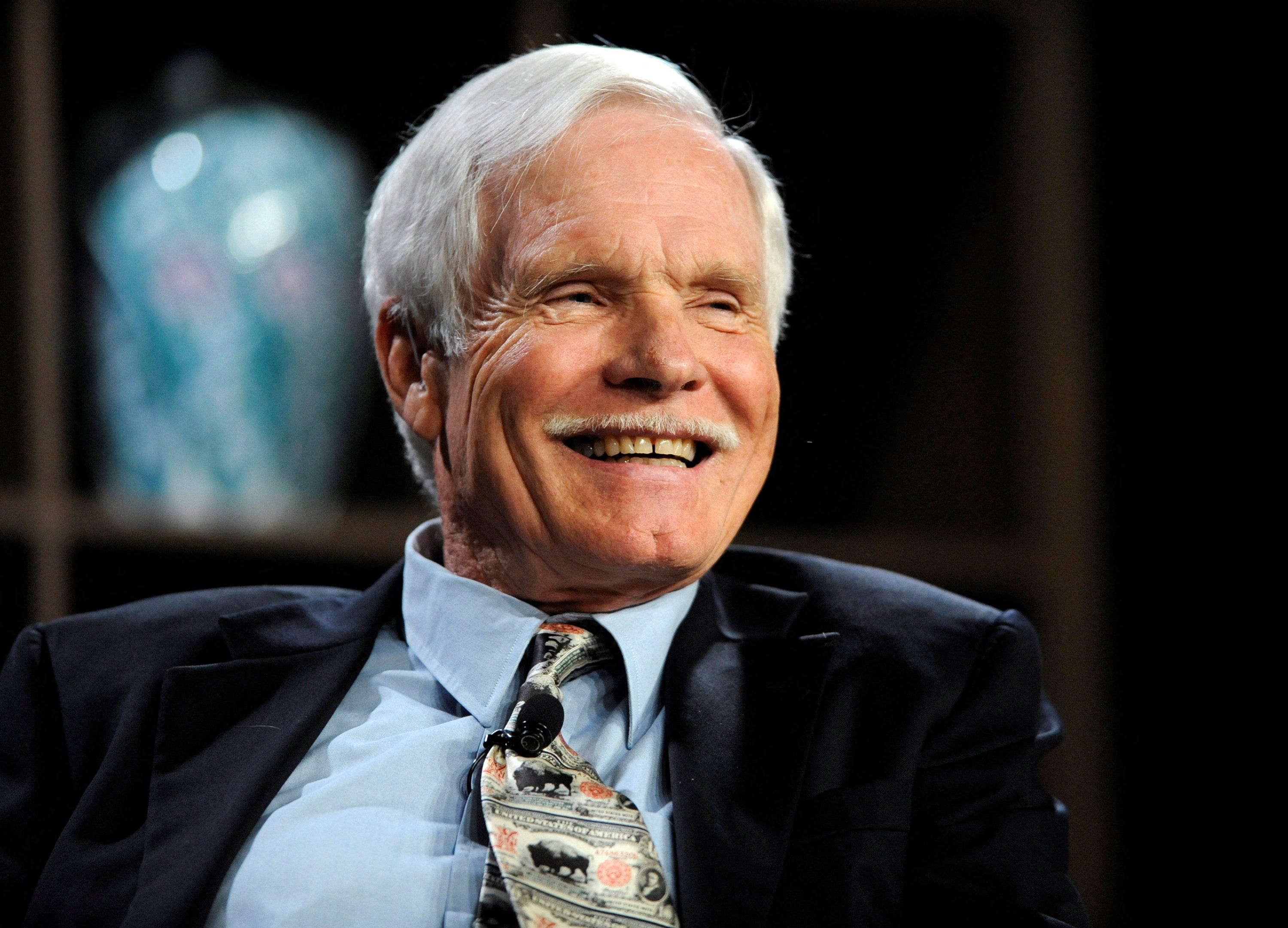
Ted Turner died Wednesday at 87, and I’ve been thinking about his legacy. Not just because he built CNN. Because he was the last of a species we’re going to need again: a billionaire who actually believed in journalism.
I started Raw Story in 2004. The same year, Turner published an essay in Washington Monthly that I’ve been re-reading this week. “Without the proper rules, healthy capitalist markets turn into sluggish oligopolies, and that is what’s happening in media today,” he wrote. “When you lose small businesses, you lose big ideas.”
Twenty-two years later, the Ellisons are circling CNN, Bezos has neutered The Washington Post, and in a year, most of cable news will be controlled by billionaires loyal to Donald Trump.
What made Turner different seems sadly passé: he loved the news. He thought it mattered. When Tom Johnson, then president of CNN, asked Turner what the rules were for covering the news, Turner gave him one rule: be fair. That was the rulebook.
In the run-up to the Gulf War, Johnson told Turner it was going to take $30 million over budget to cover the impending war. Turner said, “You spend whatever it takes, pal.” That’s how CNN ended up the only network broadcasting live from Baghdad while the bombs were falling.
Try to imagine the Ellisons saying that today. If anything, they’d cover it up. They cut. Turner spent. That’s the difference.
Maureen Dowd put it perfectly this week: “Unlike today’s greedy and soulless tech billionaires, Turner had fun being rich. The lords of the cloud aren’t swashbucklers; they just are buckling to President Trump.”
Turner was a wild man. He’d sleep on the couch in his Atlanta office in a bathrobe and eat out of vending machines. He built CNN from nothing. He pledged a billion dollars to the United Nations in 1997. He shamed Bill Gates and Warren Buffett into giving more, calling them “ol’ skinflints” and proposing an “Ebenezer Scrooge Prize” for the stingiest billionaires.
A Number That Stopped Me Cold
Yesterday, in Harper’s Magazine, I learned something that struck me cold: the median age of a primary voter in the 2024 elections was 65.
I had to read it twice.
Here’s why this matters. Around 90 percent of seats in the U.S. House of Representatives are effectively decided in primaries, not in general elections. Most districts are gerrymandered into safe seats for one party or the other. The general election is a formality. The primary is the actual election.
Which means the people choosing nearly 400 of our 435 House members are not reflective of our country as a whole. (The median age in America is 39.)
Nationally, turnout among voters 65 and older was six times higher in the 2024 primaries than turnout among voters under 34. Six times. The next Congress is being picked by one slice of America while everyone else sits it out.
I want to be careful here. Many of you reading this are over 65. You vote. You pay attention. You read newsletters like this one on a Sunday morning. You’re the reason this thing exists. When I talk about gerontocracy, the word political scientists use, I’m not talking about you. I’m talking about a system that has quietly handed one age cohort outsized power, with consequences nobody asked for.
The consequences are everywhere. The median age of a member of Congress was in the early fifties from 1960 to 1990. It’s over sixty now.
Last year, 75-year-old Gerry Connolly beat AOC for the top Democratic seat on the House Oversight Committee, then died of throat cancer a few months later. His absence made it that much easier for House Republicans to ram through Trump’s One Big Beautiful Bill, slashing taxes and welfare in one swing. Texas Republican Kay Granger vanished from the Capitol last year and was found six months later in a memory-care facility.
She never even resigned.
There’s a partisan dimension too. Americans 65 and older have moved from a reliably Democratic group to a reliably Republican one over the past two decades. Two-thirds of voters who align with the Republican Party are 50 or older. About a third are 65-plus.
This isn’t really about age. It’s about a system that rewards one type of voter: settled, retired, available on a Tuesday morning in March, and punishes everyone else. Young people move more, work irregular hours, can’t always get off shift to vote in a primary nobody told them mattered. The over-65 cohort has time, stable addresses, and decades of practice navigating the ballot. They show up. The system was built this way.
So how do we fix it?
Open the primaries. If 90 percent of House races are decided in primaries, every voter — independents, infrequent voters, young people who haven’t yet picked a team — should be allowed to vote in them. Closed primaries are an invitation-only election for the most committed partisans. Throw the doors open.
Kill partisan gerrymandering. Independent redistricting commissions work in states like Michigan, and they break the lock incumbents have on their own districts. Friday’s Virginia ruling stung, but the long-term fight is to take map-drawing away from politicians entirely.
Make voting trivially easy for young people. Automatic registration when you get a driver’s license. Same-day registration. Mail ballots that don’t require you to be home on a Tuesday. Election Day as a federal holiday. None of this is radical. Most working democracies do all of it. We just don’t.
Reasons to Keep Showing Up
Friday’s Virginia ruling was a letdown. But this week also brought real news.
In Michigan, Democrat Chedrick Greene won a state Senate seat by 19 points in a district Kamala Harris carried by less than one point in 2024. An 18-point swing in five months. That’s the kind of number that reshapes how political pros think about November.
In Ohio, Dr. Amy Acton, the public health director who steered the state through the pandemic, won the Democratic gubernatorial primary unopposed. She’ll face Vivek Ramaswamy, the biotech billionaire who self-funded his primary win and who’s widely seen as beatable in November.
The system is run by people who show up. So we keep showing up. Every primary. Every special election. Every Sunday morning, with a cup of coffee and a fight worth having.
Thank You, Truly, for Being With Us
Raw America does this work because of you. We don’t take corporate money. We don’t take billionaire money. We don’t have a parent company looking over our shoulder. We have readers, and that’s the whole point.
Every paid subscriber lets us pay our reporters and our video team. Every paid subscriber lets us chase stories the legacy press is too afraid or too compromised to touch. Every paid subscriber is a small vote against the Ellisons, the Bezoses, and the soulless oligarchs buying up what’s left of the American press.
Ted Turner spent whatever it took. We try to do the same. Thanks to you.
Enjoy your Sunday. Please share this with someone who needs to know.
See you next week.
— John Byrne
Founder, Raw America and Raw Story
I am Canadian and I grieve for our friends in the USA. I believe Canadians love and respect our non-MAGA cousins and I support Raw America for bringing us fair and truthful news.
Thank you John for the great article. Nothing personal but wasn’t about rump, Iran and other stuff that makes me shake my head in disbelief. 😁